Cleaning
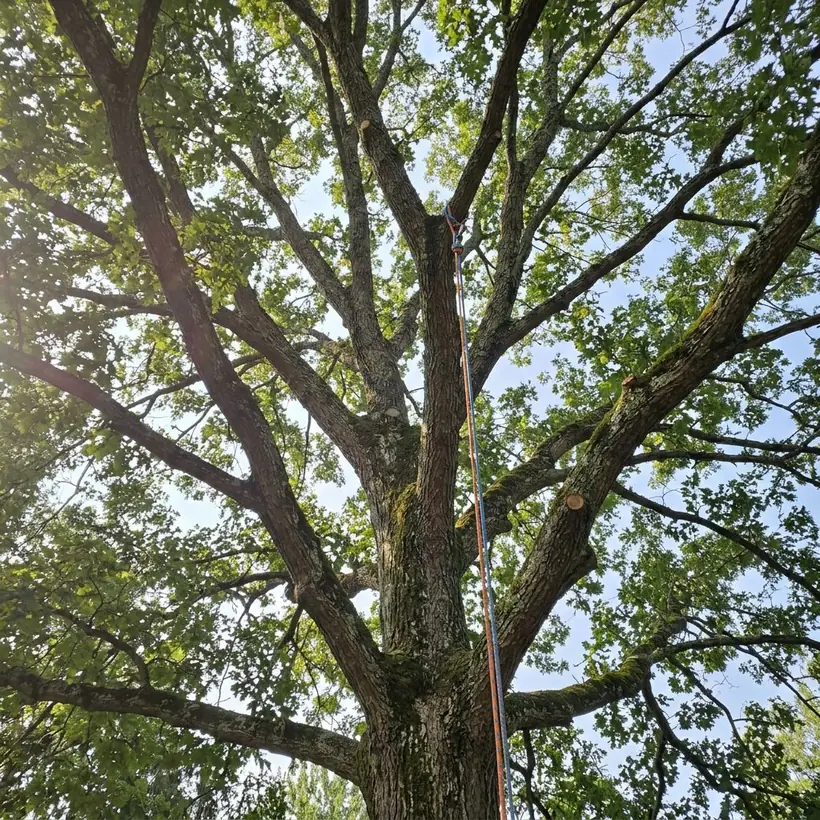
Dead, broken and crossing limbs come out first. This is the safest place to start on any older tree, and it can happen any time of year.

Tree trimming in Grand Junction, CO
Good tree trimming in Grand Junction removes dead, crossing and heavy limbs without topping the tree. Most shade trees are best pruned from late winter to early spring, though deadwood can come out any time. GJ Tree Co gets you a quote in writing.
What the crew can do
Most pruning jobs combine four kinds of work: cleaning out dead wood, thinning a dense crown, raising low limbs for clearance, and reducing long heavy limbs. Asking which ones your tree needs gets you a clearer quote than asking for a trim, and it keeps the crew working toward a stated goal.
Dead, broken and crossing limbs come out first. This is the safest place to start on any older tree, and it can happen any time of year.
Selected limbs are removed to reduce density and let light and wind through, without changing the overall shape of the crown.
Lower limbs come off for clearance over a driveway, sidewalk, roof or play area. Ask the crew to state the height in the quote.
Long, heavy limbs are shortened back to a side branch. Common on old cottonwoods and elms reaching over a roof.
The one to refuse
Topping cuts the whole crown back to stubs, and it creates the problem it claims to fix. CSU Extension says it opens the tree to internal decay and cracking, and that the fast regrowth is structurally unsound. A smaller tree today becomes a weaker, more dangerous tree a few years later.
Source: CSU Extension, Pruning Mature Shade Trees
How much to take
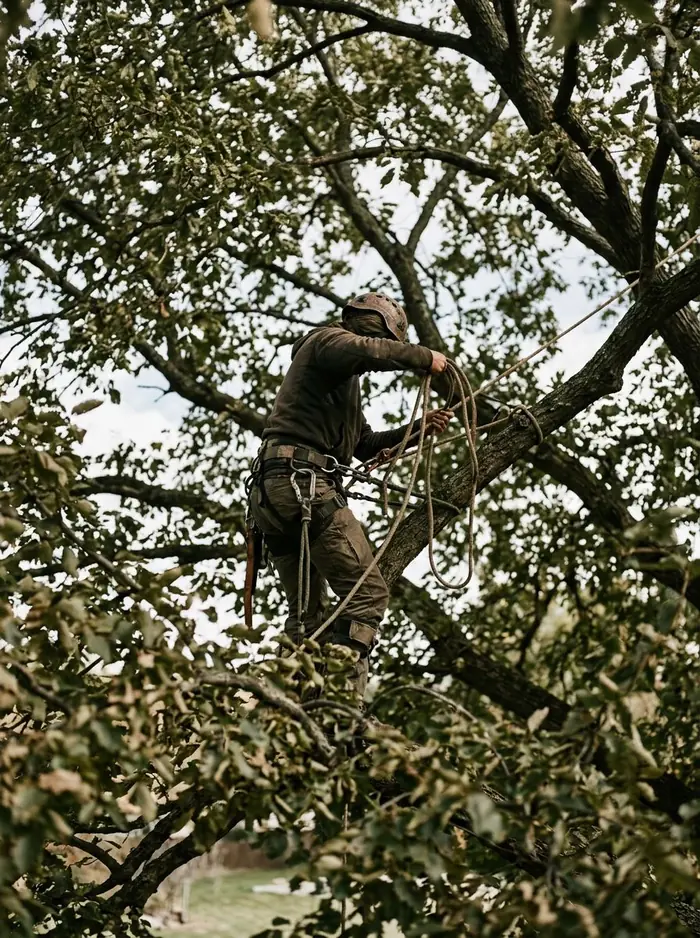
Pruning removes the leaves a tree feeds itself with. CSU Extension guidance limits the dose by the age of the tree, and a tree already stressed by drought should get the lighter end. Write the limit into the quote, so a good-looking job does not quietly take too much of the crown.
Valley timing
Timing depends on the job. Structural pruning fits the dormant season, per CSU Extension, and hazards should not wait for a good month. Local soils and light rainfall also matter: the City of Grand Junction says trees here need supplemental water, so stressed trees deserve a lighter hand.
| When | Good for | Worth knowing |
|---|---|---|
| Late winter to early spring | Structural pruning on most shade trees, and fruit trees for crop and shape | The tree is dormant and its structure is easy to read. |
| Spring | Deadwood on cottonwoods and elms before the windy season | Book early. Limbs that looked fine in fall may not have leafed out. |
| Summer | Clearance, and dead limbs you can now see clearly against live ones | Keep it light on trees short on water. |
| Fall | Deadwood and hazard limbs ahead of early wet snow | Heavy snow on leaves still in the tree can split weak limbs. |
| Any time | Broken, cracked or hanging limbs | Do not wait if it could fall on a person, roof or car. |
Orchard and yard
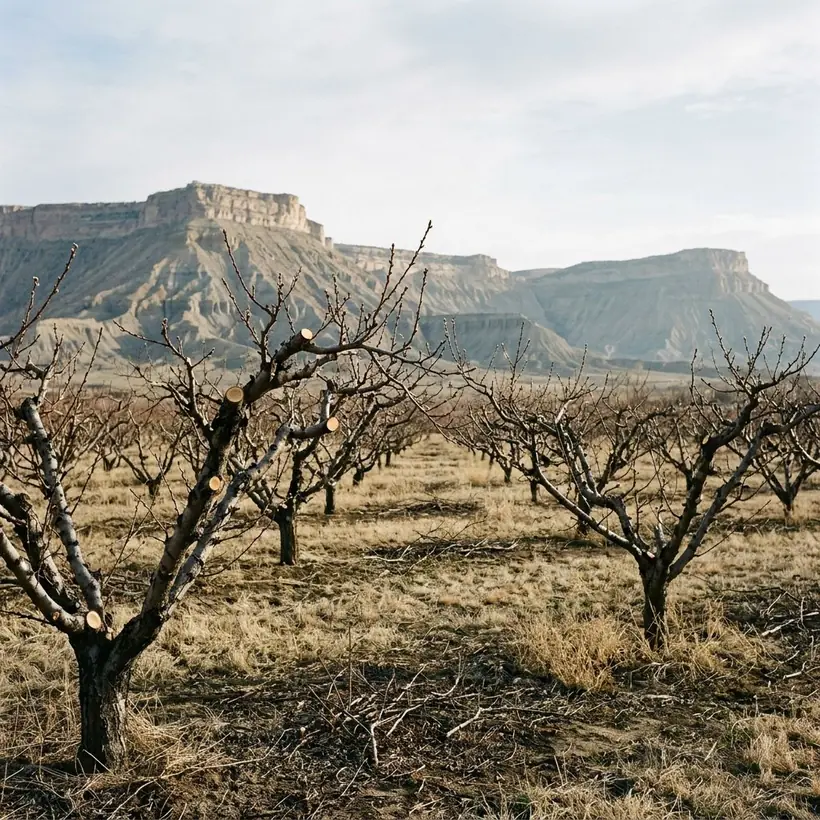
Fruit trees are pruned for crop as well as structure, which takes different cuts than a shade tree. In Palisade, Clifton and Orchard Mesa, many yards hold old orchard trees. Ask whether a crew does fruit work specifically, because a tidy shade-tree cut can cost you next season's peaches.
More local detail for Palisade and Orchard Mesa.
Short answers
Short answers, with the source where it matters.
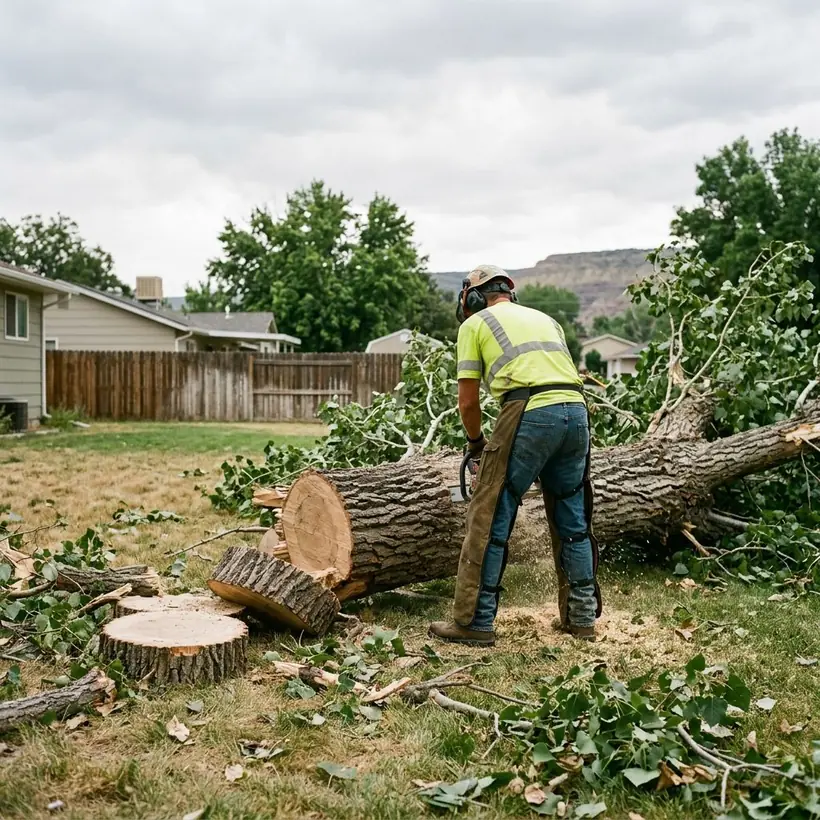
Late winter to early spring, for most shade trees, just before new growth starts, according to CSU Extension. The tree is dormant and you can see the branch structure. Dead or hazardous limbs can come out any time of year, so a cracked limb over the driveway should not wait for February.
Less than most people expect. CSU Extension suggests limiting mature trees to about 5 to 10 percent of live wood, and medium-aged trees to about 10 to 25 percent, depending on growth and vigor. Put the limit in the written quote so everyone knows where the crew stops.
No, not for a shade tree. CSU Extension says shade trees should never be topped, because it opens the tree to internal decay and cracking, and the regrowth is structurally unsound. If someone offers to lower a tree by cutting the whole crown back to stubs, ask about cleaning and structural pruning instead.
People use the words interchangeably. Trimming usually means shaping and clearance, such as limbs off a roof or over a driveway. Pruning usually means cuts made for the health and structure of the tree. Ask the crew to describe the actual cuts and goals rather than relying on either word in a quote.
Usually the City, in Grand Junction. Under municipal code 8.32.080, the City provides standard maintenance on street trees and the adjoining owner provides the water. If you want a private company to prune one, the City requires a public tree maintenance permit first, so request that before you hire anyone.
Send the details
Tell us what is bothering you about the tree. We follow up with next steps and a written price.
If a tree is on a power line or anyone is hurt, call 911 or your electric utility first.
Dead, leaning or too close to the house.
Ground below grade, ready to replant.
Who to call first, and what comes next.
Yellow leaves, dead limbs, beetles and cankers.
Support for a weak fork or a heavy limb.
Lots, brush, Russian olive and tamarisk.
Thinning and cleanup around the home.
Guides and tools: Grand Valley tree guide, Tree permit and HOA checker, Tree removal cost estimator, Storm alerts and damage help.
Get a free quote from any Grand Valley community on this list.