Photograph first
Wide and close, from several sides, with the base of the tree. Do it before limbs move, unless someone is in danger.

Storm and emergency in Grand Junction, CO
If a tree hits your house, car or a power line in Grand Junction, get everyone clear first. Call 911 for any injury, fire or downed line, then your power company. Photograph the damage before cleanup, call your insurer, and then send us the details for a quote.
Who to call
The right first call depends on what the tree hit. Wires come first, always, and no tree crew should touch a tree that is on an energized line. City trees have their own process, and a tree on your own property is a call to your insurer and then to a crew.
| What happened | First call | Then |
|---|---|---|
| Tree on a power line | 911 if a line is down or sparking, then your electric utility | Request a crew after the utility says it is safe |
| Tree on the house, someone inside | 911 if anyone is hurt or trapped, or if you smell gas | Insurer, then a crew for tarping and removal |
| Tree on the house, nobody hurt | Your insurer, after photos | A crew for limb removal and a safe takedown |
| Tree across the driveway | A crew, once you have your photos | Ask your insurer whether blocked access is covered |
| Tree across a public street | 911 or the non-emergency line, if it blocks traffic | City of Grand Junction if it is a City tree inside city limits |
| Big limb cracked, still hanging | A crew, and keep people out from under it | Do not climb up to cut it yourself |
Why it happens here
Grand Valley storm damage usually traces to weak wood and bad timing. CSU Extension says fast growers like cottonwood and Siberian elm are soft wooded and break in storms. Wind and microbursts snap brittle limbs, and early wet snow can split a tree that has not dropped its leaves yet.
Sources: CSU Extension, Selecting Trees and Elm Trees
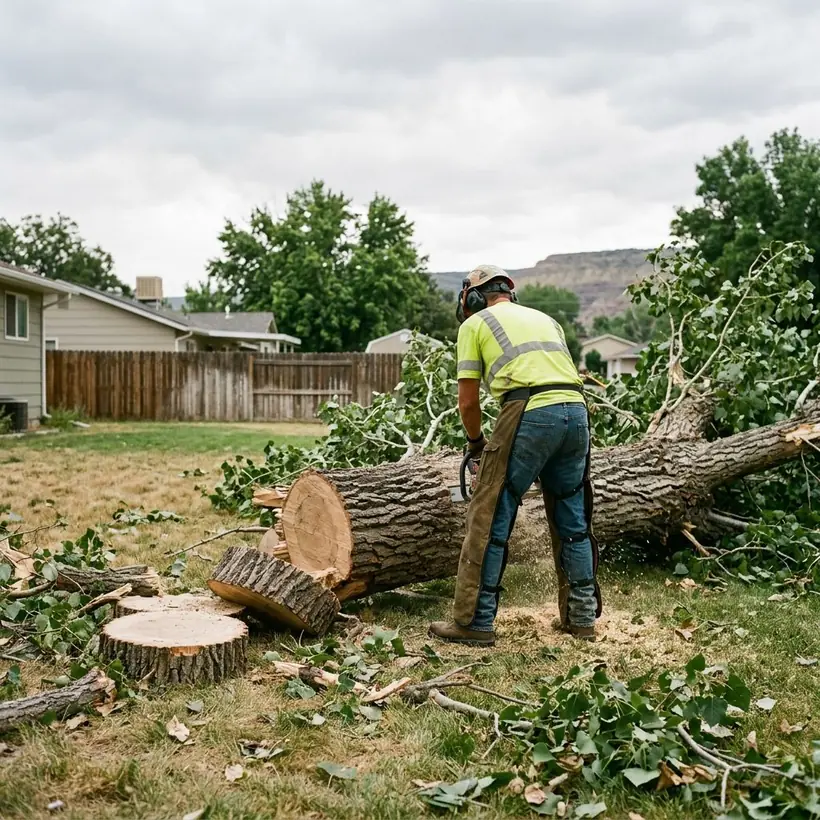
Before the wood moves
Policies differ, so your own insurer decides. In general, homeowners coverage responds when a covered storm drops a tree on a covered structure, and debris removal often has its own limit. A tree that hits nothing is often not covered. Good photos and a written, itemized invoice make the claim easier.
Wide and close, from several sides, with the base of the tree. Do it before limbs move, unless someone is in danger.
Ask for a written quote and invoice that separate tarping, limb removal, takedown and hauling.
Your insurer may want an adjuster to see it. Ask what they need and what emergency work is okay right away.
After a big wind
After a storm, not everyone at the door is who they seem. Slow down for ten minutes and check. Inside Grand Junction, a tree company needs a City license, and the City's list shows who holds one. These questions work on anyone, including crews we send you.
Short answers
For the morning after, when you need the short version.
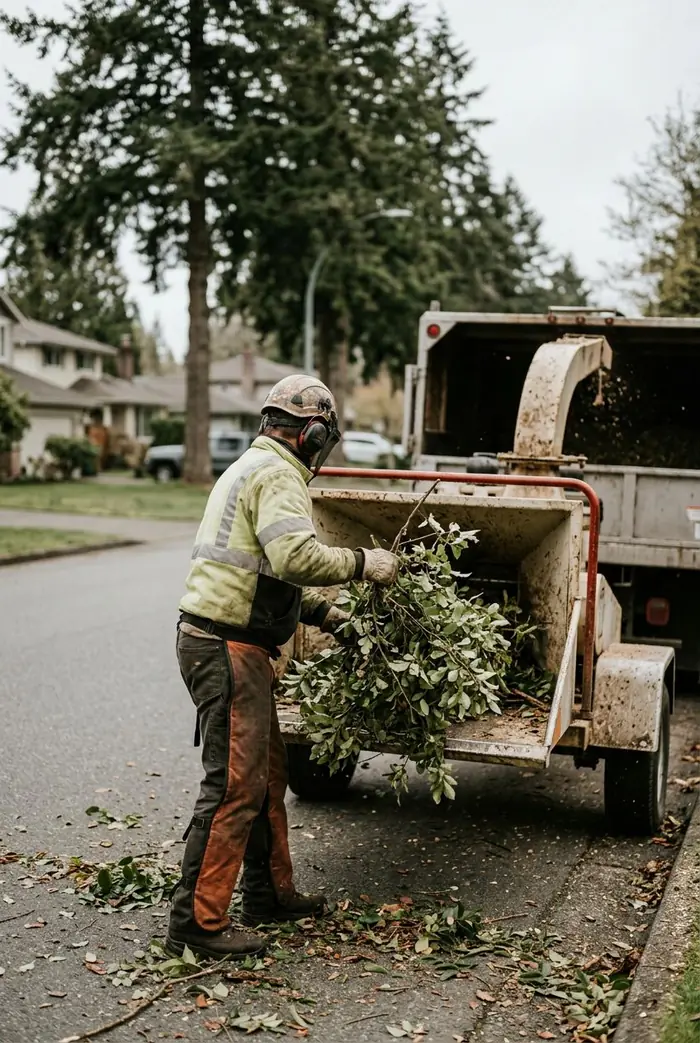
Your power company or 911 first. Stay well clear of the tree and anything it touches, and treat every downed line as live. Xcel Energy and Grand Valley Power both serve parts of the valley, so check your bill. Once the utility says the line is safe, send us the details and a crew will follow up.
Often, if it hit a covered structure. Policies generally respond when a storm drops a tree on your house or garage, and debris removal is often capped. A tree that lands in the yard without hitting anything is often not covered, and neither is one that fell from neglect. Your own policy decides, so call your insurer.
Usually your own homeowners insurance, at first. Your policy normally covers your house no matter whose tree it was. If the neighbor ignored a clearly dead or dangerous tree, they may carry some liability, and your insurer can look at that. Take photos of the tree and the damage before anything gets moved.
Contact the City of Grand Junction. Trees on City property, typically the strip between sidewalk and street, fall under City Forestry, and a public tree maintenance permit applies before private work on them. If it is blocking a street or touching a line, call 911 or the utility first and report it to the City afterward.
The crew tells you straight when it follows up. We won't promise an arrival time we can't back up. After a valley-wide wind event, crews get stretched and the hazards come first: trees on houses, blocked access and limbs hanging over walkways. Even in a hurry, ask for the price in writing before work starts.
Send the details
Send the details once everyone is safe. If a line is involved, wait until the utility has cleared it. We follow up with next steps.
If a tree is on a power line or anyone is hurt, call 911 or your electric utility first.
Dead, leaning or too close to the house.
Deadwood, heavy limbs and clearance.
Ground below grade, ready to replant.
Yellow leaves, dead limbs, beetles and cankers.
Support for a weak fork or a heavy limb.
Lots, brush, Russian olive and tamarisk.
Thinning and cleanup around the home.
Guides and tools: Grand Valley tree guide, Tree permit and HOA checker, Tree removal cost estimator, Storm alerts and damage help.
Get a free quote from any Grand Valley community on this list.